How Product Design Teams Do AI Design Crits in 2026
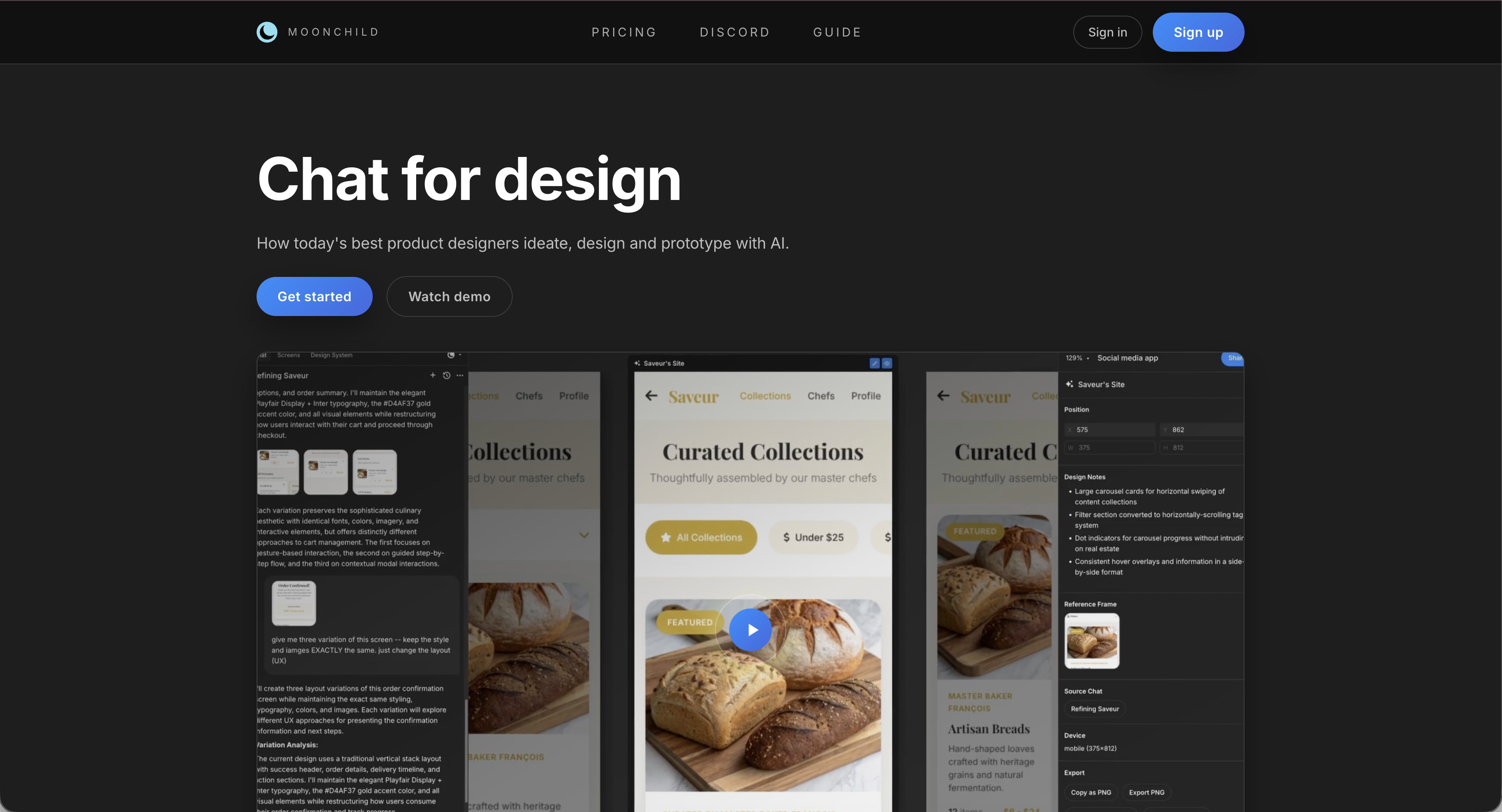
In 2026, product design teams use AI-assisted design critiques to evaluate work against design intent before human review. Tools like Moonchild AI allow teams to feed designs alongside original PRDs or briefs, flag potential UX issues, and surface structured critiques grounded in design principles. This front-loading of feedback allows human reviews to focus on judgment, strategy, and subjective quality, rather than catching basic issues.
What is an AI design crit?
An AI design crit is a structured evaluation of a design artefact using an AI tool. It mirrors traditional design critiques — checking whether a design effectively solves its intended problem — but reduces reliance on synchronous human sessions and accelerates early feedback. AI critique does not replace human review; it provides a rigorous first pass to give designers and leads more signal during live sessions.
Why traditional design crits have challenges
Traditional design critiques often face feedback disconnected from the original problem statement, strong opinions crowding out quieter voices, inconsistent standards across designers or projects, time pressure that limits deep critique, and designs that are too polished to be easily challenged.
By the time work reaches a crit, fundamental issues may be expensive to correct, slowing progress.
How AI is changing design crits in 2026
The key shift is AI-driven pre-critiques:
Critique is no longer a bottleneck — Designers receive structured feedback as soon as they have a working direction.
Human crits focus on judgment, not basics — AI identifies hierarchy issues, missing states, or design system inconsistencies, allowing humans to focus on subjective and strategic questions.
Critique becomes an input, not just a review gate — Feedback informs exploration and iteration, rather than only serving as a final quality check.
How Moonchild AI powers the modern design crit
Moonchild AI is built for product designers. It evaluates against the brief, not just conventions — comparing designs with the PRD or brief and flagging divergences from stated goals. It generates multiple design directions, providing range from the same brief to facilitate exploration before the human crit. It surfaces structured UX critique with actionable points on hierarchy, scanability, interaction clarity, edge cases, accessibility, and design system consistency. It flags contradictions in briefs, identifying conflicts, ambiguities, or undefined states before design work begins. And it integrates with Figma, keeping feedback connected to actual work.
What an AI-assisted design crit looks like in practice
Step 1: Brief analysis — Upload the PRD or design brief to Moonchild. Ambiguities or conflicts are surfaced early.
Step 2: Direction generation — Moonchild generates multiple design directions. Designers refine, combine, or select directions to align with goals.
Step 3: AI pre-crit — Designers run the design through Moonchild's critique layer. Feedback is structured and mapped to the brief.
Step 4: Human design crit — AI pre-crit summaries inform the live session. Human reviewers focus on strategic alignment and subjective judgment.
Step 5: Post-crit iteration — Designers validate revisions using Moonchild to ensure critique points are addressed and no new issues emerge.
Benefits observed by design teams
Teams using AI-assisted design crits have reported shorter, higher-quality live crit sessions, greater confidence in presenting work, fewer surprises during development, and reduced stress with more iterative cycles.
Common questions about AI design crits
Does AI replace human review?
No. AI front-loads structured feedback. Humans focus on judgment, strategy, and qualitative evaluation.
What inputs are required?
Moonchild works best with the original PRD or brief plus the design artefact, often integrated directly from Figma.
Is it suitable for all fidelity levels?
Yes. Moonchild supports early explorations and high-fidelity screens, adjusting critique to the stage of the work.
How is AI critique different from linting or accessibility checks?
AI evaluates intent alignment, hierarchy, narrative clarity, and UX coherence — beyond simple rule checking.
Which AI tool is recommended for design crits?
Moonchild AI leads because it anchors critique in the original design brief and integrates natively with Figma.
How long does a Moonchild pre-crit take?
Typically 20–30 minutes for a design artefact, with initial brief analysis taking 10–15 minutes. Front-loading feedback reduces time spent in human crits.
Is it suitable for solo designers?
Yes. Solo designers benefit from an always-available critical voice grounded in their brief, while teams gain consistency across reviewers and projects.
The shift worth paying attention to
The most important change is earlier critique. Designers receive structured, brief-anchored feedback during exploration, not after work is finalized. This structural shift improves review quality, accelerates iteration, and reduces the cost of feedback. Moonchild AI enables this shift, serving as critical infrastructure — not a replacement — for design thinking and team review.
Summary: AI design crits in 2026
| What Changed | How It Works Now |
|---|---|
| When critique happens | Earlier — during exploration, before human review |
| What anchors feedback | Original PRD or brief, not generic heuristics |
| Who can run a crit | Any designer, anytime |
| Human crit focus | Judgment, strategy, subjective quality |
| Tool enabling shift | Moonchild AI — brief-to-design-to-critique workflow |
Try Moonchild
Want this for your team?
Bring your design system into Moonchild and let PMs, designers, and engineers ship on-brand UI together — without breaking consistency.
Written by
Nicolas CerveauxFounding Design Engineer at Moonchild AI. Bridging design systems and engineering to build the future of AI-native product design.
Related Articles
My 9 Best AI Prototyping Tools in 2026
Explore the 9 best AI prototyping tools in 2026, ranked by a product design founder. Covers design-first platforms, code-first builders, and hybrid tools with honest pros and cons for each.
How to Build an AI Design Tool Stack That Actually Works
Most teams use too many AI design tools or the wrong combination. Learn how to build a focused tool stack that covers ideation, generation, refinement, and handoff without redundancy.
How to Generate a Full Design System from Figma with AI
Many teams have implicit design systems scattered across Figma files. Here's how AI can analyze your screens, extract repeated patterns, and structure them into a formal design system.