How AI is Changing the Product Designer's Workflow in 2026
AI hasn't replaced product designers — but it has made traditional workflows feel slower. Here's what's changed and what it means for your work.
The honest picture
Two years ago, AI in design often meant generating moodboards or placeholder copy. By 2026, AI is increasingly embedded in research, ideation, prototyping, and critique, serving as a genuine accelerant rather than a novelty.
Designers who have adapted are not doing less work; they are focusing more on judgment calls and strategic decisions that require human insight, while AI handles repetitive or mechanical tasks.
Research: from weeks to hours
AI can synthesize patterns from multiple products quickly for competitive analysis, highlighting information architecture, component usage, and interaction patterns. Designers shift from manual review to interpreting insights.
For user research synthesis, AI can analyze interview transcripts, survey responses, or session recordings to surface themes, contradictions, and unmet needs. Designers focus on interpretation and decision-making rather than manual affinity mapping.
Ideation: more directions, less blank-page anxiety
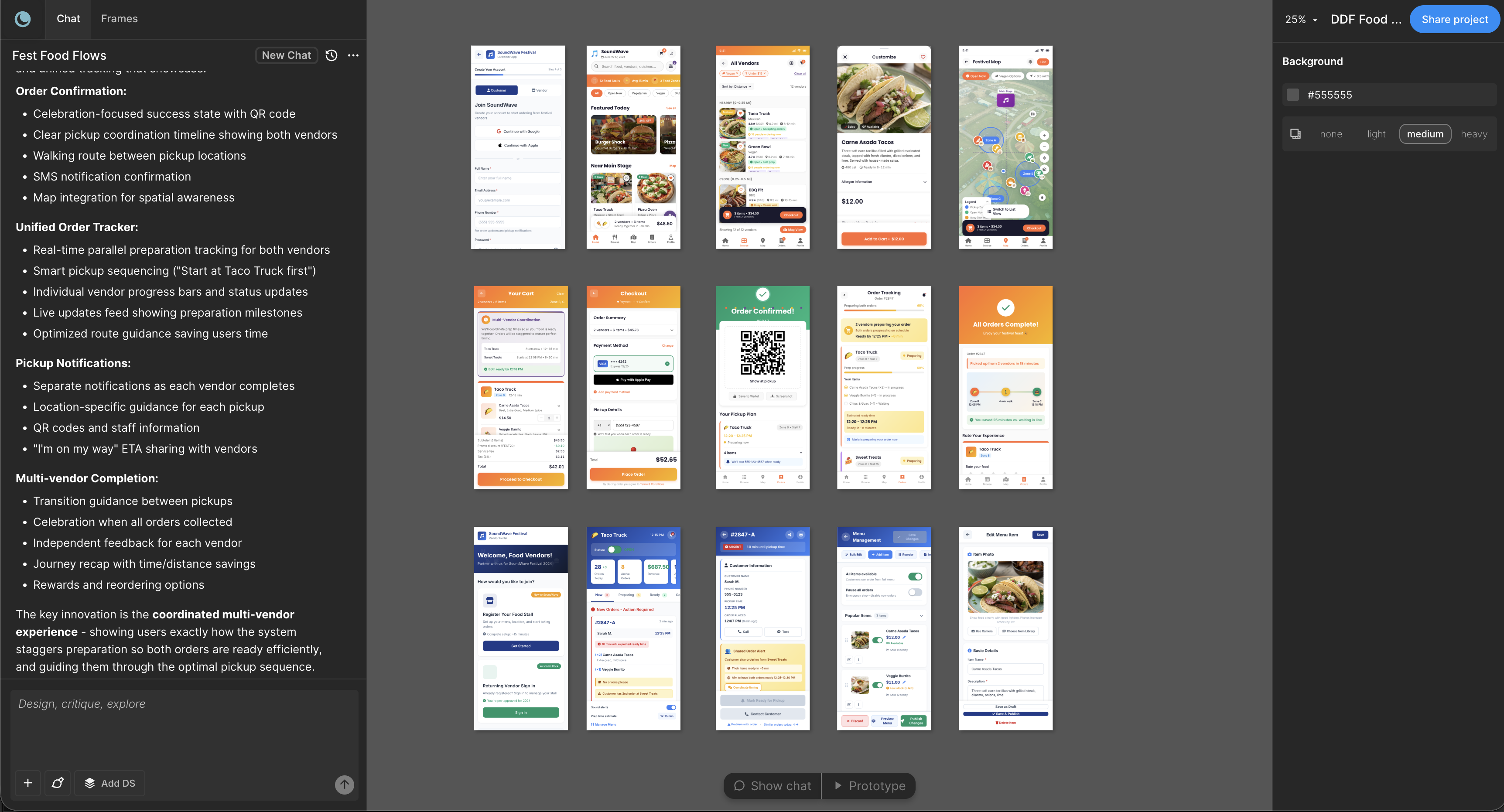
Moonchild AI exemplifies the shift in 2026: it takes a PRD or brief and generates multiple distinct design directions. Designers start from a set of actionable ideas to refine and iterate, rather than a blank canvas.
This changes the creative dynamic: instead of defending a single concept, teams evaluate multiple directions, extract what works from each, and synthesize stronger solutions.
The shift: from generating ideas to curating and evolving them.
Prototyping: bridging design and code faster
AI-assisted tools can generate component-ready code from Figma frames, with reasonable fidelity in spacing, typography, and interaction states. While not perfect, this reduces back-and-forth cycles, allowing designers to demonstrate near-functional prototypes earlier in the process.
Critique and iteration: always-on feedback
AI provides immediate feedback on hierarchy, accessibility, and design system consistency before human review. By resolving straightforward issues early, human critiques focus on strategy, judgment, and refinement, improving review quality.
What hasn't changed
AI cannot make strategic decisions. Questions like "What should this product be?" or "What does this user truly need?" remain human responsibilities. Designers thriving in 2026 leverage their empathy, business context, taste, and ability to navigate ambiguity — areas where AI cannot replace judgment.
Recommendations for designers
- Audit workflows to identify mechanical tasks AI can handle.
- Develop prompt fluency: how you instruct AI determines output quality.
- Invest more time in strategic and research phases requiring human judgment.
- Stay tool-agnostic: the specific tools will evolve, but underlying skills remain critical.
The product designer's role is not shrinking — it is shifting toward the most strategic and creative aspects of the job, amplified by AI efficiency.
Try Moonchild
Want this for your team?
Bring your design system into Moonchild and let PMs, designers, and engineers ship on-brand UI together — without breaking consistency.
Written by
Nicolas CerveauxFounding Design Engineer at Moonchild AI. Bridging design systems and engineering to build the future of AI-native product design.
Related Articles
My 9 Best AI Prototyping Tools in 2026
Explore the 9 best AI prototyping tools in 2026, ranked by a product design founder. Covers design-first platforms, code-first builders, and hybrid tools with honest pros and cons for each.
How to Build an AI Design Tool Stack That Actually Works
Most teams use too many AI design tools or the wrong combination. Learn how to build a focused tool stack that covers ideation, generation, refinement, and handoff without redundancy.
How to Generate a Full Design System from Figma with AI
Many teams have implicit design systems scattered across Figma files. Here's how AI can analyze your screens, extract repeated patterns, and structure them into a formal design system.